
Dr Annie Sparrow is an Australian paediatric intensivist and global health specialist whose work focuses on conflict settings, emerging infectious diseases and antimicrobial resistance. Since 2012 she has worked extensively in Syria and eastern Congo, training local clinicians, supporting outbreak responses, and documenting systematic attacks on healthcare. Her articulation of the weaponization of healthcare is now widely used to describe war strategies that inflict mass casualties while obstructing access to medical care. She has advised WHO Director-General Dr Tedros Adhanom Ghebreyesus for several years on health challenges in conflict zones and emergency settings.
Her fieldwork spans more than two decades across Afghanistan, Haiti, Timor-Leste, Somalia, Sudan, Chad, Lebanon, Syria and eastern Congo in the DRC, with an annual programme on remote Idjwi Island providing large-scale screening and treatment for malaria, anaemia, parasitic infections, poxes and kwashiorkor. Dr Sparrow collaborates widely with human rights organisations, sporting associations, trade unions, the private and education sectors, and has testified on war crimes before the U.S. Congress, the Irish Dáil and the International Criminal Court.
She has guided responses to major outbreaks including polio, cholera, Ebola, Covid-19 and mpox, and elevated the global threat of anti-microbial resistance through her work on drivers of resistant pathogens in modern conflicts and potential solutions. Dr Sparrow publishes in The Lancet and NEJM and writes regularly for leading international policy journals on topics including the politicization of aid under the United Nations, AMR and other global threats, chemical weapons and the new biological warfare.
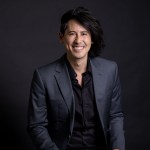
Jordan is a leading Australian engineer, inventor and innovator, committed to improving as many lives as possible, and becoming a driving force behind both human and technological evolution as we move into the future.
An internationally renowned engineer for humanity, Jordan designs life-changing technologies to transform the lives of people with disabilities and the elderly through his role as founder of Psykinetic, a social business committed to bringing positive, sustainable and life-altering change. He also shares his adventures through documentaries across the world. Inspired by human endeavour, Jordan has big ambitions to see our world step consciously and creatively into a better future.
Jordan is Founder and CEO of Psykinetic, a social business creating futuristic, inclusive and empowering technologies to improve independence and quality of life for disability, aged care and beyond. Dr Jordan and his team have successfully created a mind-controlled wheelchair, numerous Virtual and Augmented reality applications, inclusive gaming, an instrument that enabled a friend with cerebral palsy to perform live music with her eye movements and blinks, and devices that make it possible to control household appliances or even drive cars using only the tiny electrical signals created from eye movements.
Author of the book ‘A Human’s Guide to the Future’, Jordan is also an award-winning documentary maker and presenter. In 2016 he collaborated with the Australian-based production company, The Feds, and the ABC Catalyst to create and present his first TV documentary Becoming Superhuman, which went on to win many prestigious awards both locally and internationally. His work is regularly featured in the media. He has since gone on to present a second ABC Catalyst documentary Meet The Avatars exploring the impacts of Virtual Reality, including creating virtual interactive avatars to preserve memories of loved ones. He has also presented numerous documentaries with Discovery Channel and National Geographic including Frontiers of Science, Smart China Start-up Revolutions, Vietnam: Connecting East Africa, and Tibet: Living On The Roof Of The World. He recently founded his own media company and aims to continue creating world-changing content on the intersection between technology and humanity.
Jordan is a passionate ambassador for STEAM education, adaptable mindsets and big-picture thinking, and holds a degree in Electrical Engineering, First-Class Honours, Diploma in Engineering Practice, and a PhD in Biomedical Engineering (Chancellors List) from the University of Technology Sydney. He has taught university engineering masters students and overseen PhDs in Artificial Intelligence design and Biomedical instrumentation and has supervised many more research students. He believes our young generations are the change-makers of tomorrow and has the potential to create solutions to the world’s greatest challenges.
In November 2022, the Dr Jordan Nguyen Innovation Centre at Baulkham Hills North Public School was officially opened – named by the school’s students. Jordan was a finalist for NSW in Australian of the Year in 2017, and a finalist in the AmCham (American Chamber of Commerce) awards for Artificial Intelligence. He was named in the six Harper’s BAZAAR Visionary Men of 2019, has made the list of Australia’s Most Innovative Engineers by Create Magazine, was named twice in Onalyticas Top 100 Global Influencers on Virtual Reality, travelled on a Think Inc tour with Steve Wozniak, won the Australian Computer Society’s (ACS) ˜ICT Professional of the Year Digital Disruptors Award, and has had the honour of being MC for An Evening With President Barack Obama on his last visit to Sydney.

We are in the age of AI investment. AI systems are meaningfully changing how medicine is practiced and how health services are operated – from AI scribes to AI workers and the increasing prevalence of software as a medical device. In this session Chelsea will share insights about what she is seeing on the ground working with hospitals, medical device companies and governments. She will also share some insights into what we might expect to see in the next 10 years as AI capability improves and regulation increases. She will take time to explore how surgeons can manage the key risks arising from AI, whilst maximising the AI opportunity.
https://www.minterellison.com/people/chelsea-gordon
Chelsea Gordon is the Legal Lead in our AI Advisory team and is also a specialist health lawyer. Chelsea excels in AI regulation, governance and Responsible AI. Chelsea enables clients to maximise AI opportunities while mitigating legal risks. She has deep expertise in health and life sciences, including health regulation, novel technology, health funding, service contracting, clinical trials and therapeutic goods. Chelsea has advised Australia’s largest private health service providers, state and commonwealth health departments, medical device companies and emerging technology providers. She also spent many years acting for and defending doctors.
Christobel is internationally recognised as one of Australia’s most prominent research orientated cancer surgeons. She has substantially contributed to breast cancer research, including clinical trials of new treatments, and psychosocial, translational and health services research. She has performed research for >30 years evaluating the efficacy and utility of therapy for early breast cancer, attracted $54 million in competitive research grants, published over 200 peer-reviewed journal articles in the past five years. She sits on a number of boards, closely involved in strategic planning and management of health and cancer services in Australia and internationally. In recognition of her sustained career excellence and innovation, Christobel has been publicly acknowledged through numerous awards and honours including Research Australia Health Services Award 2024, The Order of Australia 2018, AAHMS Fellowship.
What happens when distance is no longer a barrier to surgery?
Advances in robotics and digital connectivity are rapidly reshaping the way surgeons operate, collaborate and teach. The concept of operating across borders — once theoretical — is now becoming a clinical reality.
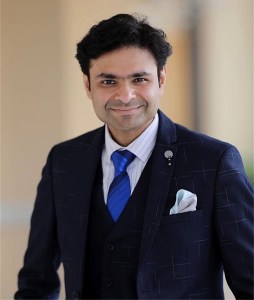
Dr Mohit Bhandari is Director of Mohak Bariatrics and Robotics in Indore and one of the world’s leading high-volume bariatric and robotic surgeons. An early pioneer of telerobotic surgery, he has been at the forefront of exploring how robotic platforms and real-time connectivity can enable surgeons to operate and collaborate across continents.
In this plenary session, Dr Bhandari will explore the evolution of remote robotic surgery and what it may mean for the future of surgical practice, training and global collaboration.

Susanne Halbherr works at the intersection of medical software, data-driven research and health data policy. After completing her studies in Molecular Biotechnology and Biomedical Engineering and Medical Physics at the Technical University of Munich, she joined Brainlab, where she worked directly with founder and former CEO Stefan Vilsmeier on addressing the evolving global health data policy landscape by architecting patient-centric data ecosystems. In 2024, she joined Brainlab’s spin-off Snke to bring this vision into practice, founding a new department to build a vendor-neutral and trustworthy health data ecosystem. Her work focuses on connecting insights from clinical registries with real-world care – from population-level analytical insights to intuitive patient-specific information at the point of care. She led the rollout of the German Spine Registry, scaling it to more than 100 sites and 20,000 enrolled patients within its first year. In her current role as Vice President at Snke, she collaborates with clinicians, researchers and industry partners to scale this ecosystem across healthcare.
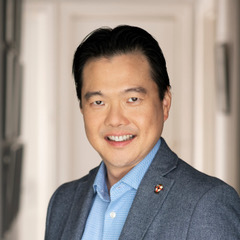
Associate Professor Ming Yew is a General, Endocrine and Breast Surgeon based in Perth, known for his commitment to excellence in surgical care and innovation. He has pioneered several Australian-first techniques, including transoral scarless thyroidectomy and prone retroperitoneoscopic adrenalectomy. In addition to his clinical work, Dr Yew has held significant leadership roles within the surgical community, serving as Head of Department, Chair of the Endocrine Tumour Board, Chair of the Royal Australasian College of Surgeons (RACS) State Committee, and as a RACS Federal Councillor. Driven by a desire to improve patient outcomes, he co-founded Inovamedical Pty Ltd, a medical device startup commercialising the Abcease device, which aims to transform the treatment of skin abscesses. Over the past nine years, the founding team has progressed through biodesign, pre-accelerator and accelerator programs, secured capital, and collaborated with bioengineering partners, patent lawyers, international patent offices, and the broader medtech industry.

My clinical work continues across the breadth of general paediatric surgery with areas of special interest in hepatobiliary surgery in children, surgical oncology and thoracic paediatric surgery.
I also have a strong interest in surgical education and standards, having contributed to the development and delivery of skills courses, curricula, and professional development programs within RACS such as TIPS, OWR, CcRISP and EMST/ATLS.
I am a member of the Paediatric Surgical Training Committee, a retired examiner, and a previous section convenor for previous ASCs.
I continue to visit the Pacific and proudly include my honorary position as a visiting member of the staff at CWM Hospital Suva as a notable and valued opportunity for me.
Joining RACS Council in 2021 as the specialty representative I have had a number of roles. I have been PSEC chair, CSET chair and am the current Censor In Chief for RACS. Being an ex officio member of the AoNZ National Committee is an important part of my College responsibility.
I was humbled and honored to be elected as your next president of RACS and commence this position at the Perth ASC.
I look forward to the opportunity and challenges this role provides and will draw on the collective wisdom and experience within RACS in so doing.
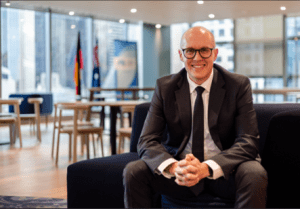
Justin Untersteiner joined the Australian Health Practitioner Regulation Agency (Ahpra) as CEO in April 2025, becoming the second person to lead the organisation since it was established in 2010.
Working in partnership with the National Boards, Justin strives to ensure Australia has a safe and professional health workforce and high levels of community confidence in the health system. He prioritises stakeholder engagement, seeking diverse views on emerging issues in a dynamic healthcare sector, and is set to lead the organisation through the most significant program of reform in its 15-year history.
An experienced senior executive, Justin’s career spans a range of complex national organisations in the Government and Not-For-Profit sectors. He is known for delivering strategic transformation initiatives in a career focused on consumer protection and public safety.
Justin has led major compliance and regulatory programs at the Australian Taxation Office (ATO) and, the Australian Financial Complaints Authority (AFCA). He has He implemented change programs including a major IT transformation, a significant data and analytics uplift, and a culture renewal program to support the delivery of high-quality regulatory outcomes. As well as leading initiatives to drive organisational efficiency and effectiveness, Justin is a champion of inclusive workplaces. He advocates passionately for gender equality and is known for publicly challenging social norms and outdated systems.
Justin holds a Bachelor of Laws (Honours) from Queensland University of Technology (QUT) and is a Graduate Member of the Australian Institute of Company Directors. He lives in Melbourne with his family.

